

Orientation is how you lean when intensity arrives — toward, away, or into stillness.
How Orientation Shapes Experience
A way of approaching the work before any experience begins
Orientation

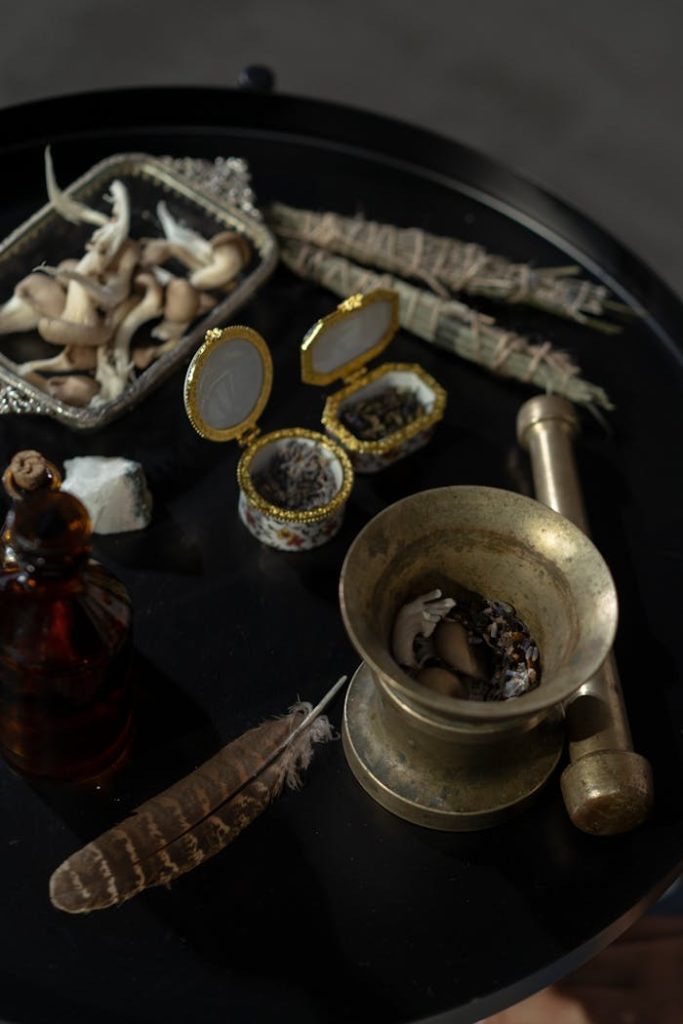
We work with altered states carefully, deliberately, and relationally. Not because they are fragile — but because people are. This is not an anomaly. It is the rule.
Over the years, we’ve seen how profoundly different inner worlds can be. Two people may enter the same ceremonial space, with the same substance, the same intentions, and the same external conditions — and emerge having had experiences that are not merely different, but fundamentally incompatible. One feels restored. Another feels destabilized. One finds clarity. Another finds overwhelm.
Our work begins from a simple recognition: human beings do not approach the sacred, the psyche, or transformation from the same posture. History, temperament, trauma, identity, belief, nervous system patterning, and life stage all shape how intensity is metabolized. Ignoring those differences — or smoothing them over with optimism and ritual — is where much harm quietly begins.
Because of this, we place safety and containment at the center of everything we do.Why readiness, containment, and timing can matter more than intention
Safety Is Not a Checkbox
In many psychedelic contexts, safety is treated as something that can be confirmed in advance — a screening form, a medical clearance, a reassuring conversation. Those elements matter, but they are not sufficient.
We understand safety as something relational and ongoing, not procedural.
Safety includes:
- Psychological stability and nervous system capacity
- The ability to remain oriented during intensity
- A person’s relationship to control, surrender, authority, and trust
- Prior experiences with altered states — including adverse or overwhelming ones
- How meaning is made when things do not go as hoped
Containment is not about preventing difficulty. It is about ensuring that difficulty does not become disorganizing, isolating, or injurious.
For some people, altered states open insight and connection. For others, they amplify unresolved grief, dissociation, shame, or fear. Neither response is a failure — but they require different kinds of holding.
We take that difference seriously.

Why the same experience can heal one person and destabilize another
Human Difference in Spiritual Posture


People arrive to this work with very different orientations — often without realizing it.
Some are drawn toward surrender and dissolution.
Some toward understanding and coherence.
Some toward healing the past.
Some toward identity, creativity, or vocation.
Some carry religious language. Others carry deep skepticism.
Some trust the unknown easily. Others have learned, for good reason, to stay guarded.
These orientations are not preferences. They are adaptive postures formed over time.
When a ceremony is designed without regard for them, intensity can overwhelm rather than clarify. When they are understood, the work becomes far more precise — and far safer.
We do not believe in one-size-fits-all healing models. Nor do we believe that the most powerful experience is always the most therapeutic one. Sometimes restraint, pacing, and timing are the intervention.
Listening carefully before deciding how — or whether — to proceed
Preparation as an Ethical Practice
Because of this, preparation is not a formality for us. It is an ethical stance. Preparation is where we listen. It is where differences surface.
It is where readiness is assessed — sometimes confirmed, sometimes challenged.
It is where we learn how someone responds under pressure, uncertainty, or emotional intensity.
Preparation may reveal that:
- More time is needed
- A different approach is warranted
- Ceremony should be redesigned
- Or that now is not the right time at all
We understand that this can be disappointing. It can also be protective.
Preparation is not about controlling outcomes. It is about not rushing people toward experiences they are not resourced to integrate.

Collaboration, discernment, and shared responsibility
How We Work Together


We almost always collaborate.
Preparation is typically held by both of us together, allowing different dimensions of a person’s experience to be seen and reflected. Some individuals benefit from dual containment; others resonate more strongly with one of us during ceremony itself. Those decisions are not made in advance — they emerge from the preparation process.
The structure of the work is shaped around the individual, not the other way around.
Some people work with us once.
Some require multiple phases.
Some integrate for long periods between journeys.
Some discover that the most important work happens before or after ceremony, rather than during it.
There is no standard path.
Collaboration, discernment, and shared responsibility
Discernment Over Access
Ready to Transform?
About Us
Transformative healing through psychedelic experiences and integration guidance.
Working hours
Lorem Ipsum
Lorem Ipsum
Contact us
202-555-0188
contact@example.com
2360 Hood Avenue, San Diego, CA, 92123